How EOR Helps Deliver Construction Projects in the Middle East
03 Nov, 202610:20Construction projects in the Middle East tend to need specialist talent sourced from multipl...

Construction projects in the Middle East tend to need specialist talent sourced from multiple countries. An Employer of Record (EOR) enables contractors and developers to legally employ, pay and mobilise workers without establishing a local entity in every market. This reduces delays linked to visas and work permits, payroll, and employment compliance while giving project teams access to the skills they need. When recruitment and EOR services are managed together, businesses can fill positions and onboard them efficiently with minimal delay.
Main Insights:
- The GCC has around $3 trillion of upcoming projects, including more than 174 active and planned data centre schemes.
- Residency in most Gulf countries is tied to a sponsoring employer, so a worker can’t start until a local entity has sponsored them.
- Setting up your own entity can take months, whereas NES Fircroft’s Movetek platform has an implementation period of around 30 days.
- A provider with construction experience can challenge a mobilisation plan before problems appear.
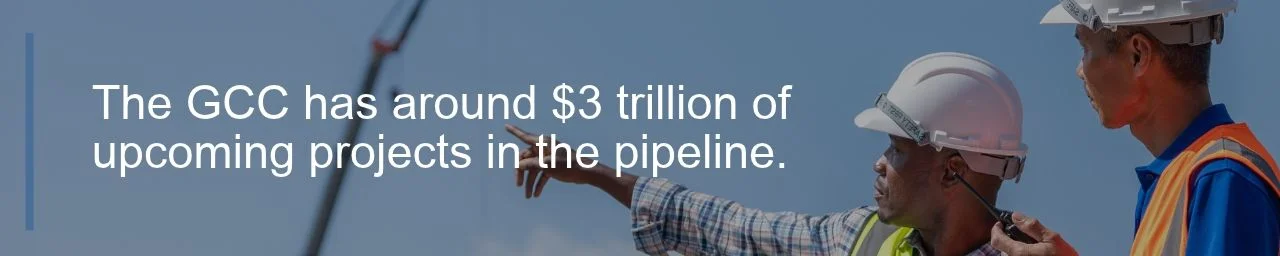
Very few regions across the globe carry a project pipeline like the Middle East’s. GCC governments and developers have around $3 trillion of upcoming projects in the pipeline, with Saudi Arabia holding nearly half of that value and construction making up close to 40% of it. Data centres are a fast-growing part of the picture, with more than 174 active and planned schemes across the six GCC states worth over $93 billion.
Delivering infrastructure projects of this kind rarely depends on one labour market. For example, a hyperscale data centre campus can need structural engineers recruited in Europe alongside commissioning specialists mobilised from Southeast Asia. Each person who’s required on-site will likely be subject to a different set of employment rules, and each needs a legal employer in the country where the work takes place. Many international contractors who have won work in the region don’t have that structure in place, and many Gulf-based firms find that nationalisation programmes limit the expatriate visas available to them. An Employer of Record in the Middle East is a practical answer to both problems.
Why do construction projects in the Middle East need a global workforce?
Construction projects in the region are typically mega-scale, covering vast areas of land and multiple project phases. Around $50 billion of contracts on Saudi Arabia’s giga projects were out to tender in late 2025, with similar figures in the UAE. Construction phases also cover a variety of industries that demand different skill sets. Data centres need electrical and mechanical commissioning expertise that few local markets have in depth, and industrial developments such as refineries and desalination plants bring their own niche trades.
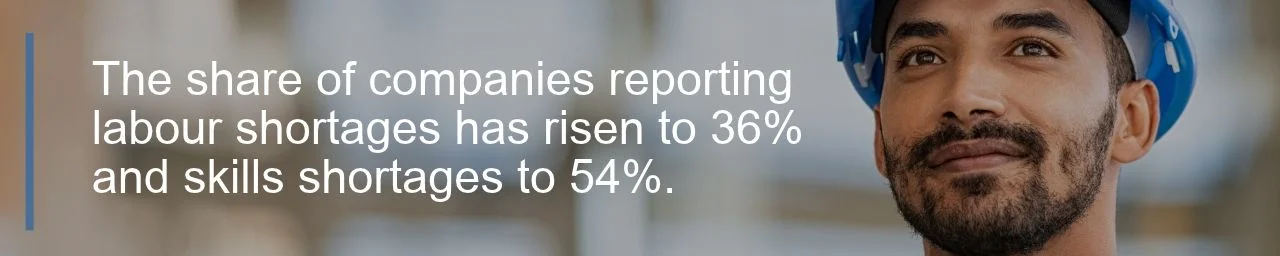
But the problem with these massive projects is the availability of skills. In the RICS Global Construction Monitor Q2 2026 report, the share of companies reporting labour shortages has risen to 36% and skills shortages to 54%, both up from Q1, with KSA and the UAE expecting increased headcount in the next 12 months. When local and regional pools run thin, upcoming construction projects compete for the same people, and sourcing scarce professionals ends up taking longer.
This is why construction staffing for the region is rarely a purely local exercise. It’s an international one, and it works only if the legal employment side keeps pace with the hiring side.
What is an Employer of Record, and how does it support construction recruitment?
An Employer of Record (EOR) is a licensed organisation that legally employs workers on your behalf while you keep control of their day-to-day tasks. For construction, this might mean a quantity surveyor sits on the EOR’s contract and payroll in the country where the project is located, yet takes direction from your project team, follows your safety procedures and works to your programme.
This partnership is beneficial as the company that wins a contract isn’t always able to employ people locally. The EOR fills that gap with a compliant employment relationship. At NES Fircroft, our in-country infrastructure and compliance function work alongside Movetek, our mobility platform, to give employees a smooth experience from offer to site induction. They still feel part of your company, not a third party’s.
What hiring and compliance challenges do multi-country construction projects face?
Employment law changes at every border. Contract terms, notice periods, working hours, and end-of-service entitlements differ between Gulf states. Visas and work permits add further challenges because residency in most countries is tied to a sponsoring employer, meaning a worker can’t start until a local entity has sponsored them. Payroll and tax follow a similar pattern, since salaries usually have to be paid through government-monitored systems, and a worker’s tax position can change the moment they cross into a new country.
Worker classification is one of the risks that catches many project teams out. Engaging a specialist as an independent contractor can look like the quicker route, yet if that person works under your direction on your site every day, a labour authority may treat them as an employee, and you could then face back payments and penalties that were never budgeted for.
These challenges multiply once people start moving between locations. A planning engineer who begins in Riyadh and is redeployed to a Dubai package halfway through the project needs a new permit and a different contract position, with the payroll following them across, and the same pressure builds when a client expects a full team to be mobilised within weeks of contract award.

How do EOR services speed up project mobilisation?
Setting up your own legal entity in a Gulf country can take months once licensing, banking, and registration with labour authorities are counted, and that’s rarely appropriate for a construction programme that starts when the contract is signed. An EOR removes the step because the employing entity already exists, is licensed and is registered with the relevant authorities.
NES Fircroft employs through its own in-country legal entities across the region, which means there’s no third party to coordinate with when a visa needs chasing or a contract needs amending. Movetek brings immigration and project work into one place, with built-in compliance checks and an implementation period of around 30 days, providing a single view of where each worker stands in the mobilisation process.
How do you choose the right Employer of Record provider for construction projects?
When you compare EOR companies in the Middle East, the starting point is legal substance. Ask whether the provider employs through its own licensed entities in each country you need or relies on partners, because that determines who is accountable when something goes wrong. Local legal expertise should come with genuine visa and immigration capability, since permits are among the most common causes of late starts.
For construction businesses, global payroll coverage alone isn’t enough. The stronger EOR partners combine compliant in-country payroll with the operational capability to move workers between project locations through a consistent support model. They should also demonstrate experience handling large-scale workforce mobilisation, not just individual hires. Equally important is the ability to manage specialist contractors alongside employees, with clear processes that reduce worker-misclassification and compliance risk.
And one of the key things to look out for is construction-based knowledge. Industry experience is just as essential as EOR capability, and it separates NES Fircroft from many other providers. A provider that understands the construction sector knows how a programme is sequenced and why a particular package can’t have any delays. It knows which certifications a site inspector must hold for a given client and how safety induction affects start dates. That understanding lets it challenge a mobilisation plan before problems appear and speak the same language as your project directors, whereas a generalist EOR processes the paperwork you hand over, and a construction specialist helps you decide what paperwork the programme needs and when. When you’re ready to shortlist providers, ask about the projects they have mobilised workers onto in your sector and who handled them.

Why does combining construction recruitment and EOR services create a competitive advantage?
Sourcing talent is only one part of workforce delivery. A candidate who accepts an offer in March still needs a contract and work permit, plus a start date that suits the site, and each handover between separate providers is a chance for delay. When construction recruitment teams and employment teams sit together, the recruiter already knows the permit position of each candidate and can screen for it, and the onboarding team knows the project requirements before the offer goes out.
Payroll, compliance, and administration matter as much as the hire. An engineer who’s paid late or receives confusing paperwork in the first month may lose motivation, and attrition on a live construction project is expensive. One accountable partner keeps the whole experience consistent, so your workers feel part of your company from the first message to the final day on site.
Partner with NES Fircroft
NES Fircroft has supported workforce expansion in the Middle East since 1999 and operates over 13 legally owned offices, providing local on-the-ground expertise. Our established regional entities allow us to provide compliant EOR and recruitment solutions for some of the world’s largest construction and infrastructure programmes.
Our local recruiters, assignment support teams, and in-country compliance specialists work together to keep your projects staffed and workers mobilised throughout the project lifecycle, all through a single partner.
Contact us today to discuss your construction recruitment and EOR requirements in the Middle East.