
What’s Next for the Life Sciences Sector? Top Trends in 2026
29 Dec, 202511:25Key Takeaways: AI acceleration is shaping the sector, with generative and agentic AI tr...

Key Takeaways:
- AI acceleration is shaping the sector, with generative and agentic AI transforming R&D, manufacturing, workflows, and talent needs as organisations seek to be more efficient and reduce costs.
- Advanced therapeutics and personalised medicine are key investment drivers, with strong growth in CGTs, gene editing, and rare disease innovation boosting demand for specialised talent.
- Hiring dynamics are shifting, as job openings are declining and competition for roles intensifies, with candidates facing longer job searches while employers gain broader talent pools but remain cautious.
- Digital fluency is becoming an essential skill, with life sciences companies prioritising skills in AI, data analytics, automation, and tech-aligned research to match the rapid acceleration of digital transformation.
The Current Outlook for the Life Sciences Sector in 2026
The global life sciences sector, currently valued at $100.88bn and set to reach $278bn by 2034, is in a period of acceleration, driven by several key factors:
- Digital transformation: Generative AI is shaping research, manufacturing, and commercial operations, with agentic AI being an area of growing interest.
- Regulatory changes: The EU AI Act, Corporate Sustainability Reporting Directive (CSRD), and European Health Data Space (EHDS) are all impacting organisational strategies.
- Evolving therapeutic and R&D trends: The rapid expansion of metabolic medication is just one area impacting major manufacturer pipelines to meet demand, with AI-guided biomarkers evolving as a predictive tool in recent trials.
- Major investment areas: Therapeutic areas are taking focus, including oncology, immunology and autoimmune disease, and rare disease treatments.
- Leading regions: Regions like Boston/Cambridge, the San Francisco Bay Area, San Diego, and Basel continue to be powerhouses in the sector, with steady hiring at a time when job openings are decreasing and fierce competition for roles is increasing.
For candidates, longer job searches and high competition are the expectation for life sciences roles in 2026. Employers, however, are likely to have a greater pool of talent to choose from, but are contending with the need for caution due to the post-pandemic rebound not materialising as hoped.

What Trends Are Impacting Global Life Sciences in 2026?
1. Increased Demand in Environmental and Agricultural Science
Environmental sciences, ecology, and agriculture are experiencing slow but steady growth, in part due to the renewed emphasis on climate change, sustainability, and food security.
As investment in these areas increases, so too does the demand for jobs, with particular focus on roles in:
- Environmental assessment and monitoring
- Carbon auditing and sustainable finance
- Environmental compliance
- Crop research
Niche areas such as environmental genomics, renewable bioenergy, precision farming, and crop genetics are also of interest.
Unlike the volatile hiring swings in other areas of the life sciences sector, environmental and agricultural sciences are expanding consistently due to societal needs — overall job postings might not be excessively high for the sector, and competition might be high, but growth is in a gentle upward curve without the risk of a short-term uptick turning into a swift downward trend.
2. AI Research & Development
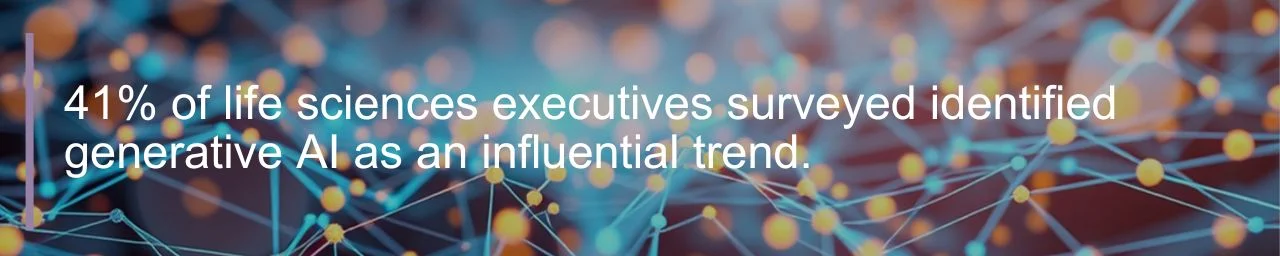
According to Deloitte’s 2026 Life Sciences Outlook report, 41% of life sciences executives surveyed identified generative AI as an influential trend, shaping research, manufacturing, and commercial operations.
Additionally, agentic AI was cited by 30% of respondents as another area of interest. Agentic AI refers to AI systems capable of acting autonomously to achieve goals, make decisions, and perform lower-priority tasks.
Issues such as higher R&D costs, continuing digital innovation and the difficult hiring climate have put agentic AI at the forefront as we move into 2026.
A study by McKinsey found that agentic AI will transform workflows, change how work is done, and increase value by promoting growth and reducing costs.
In pharma, 75-85% of workflows contained tasks that could be enhanced by agentic AI, freeing up to 25-40% of an organisation’s capacity. In medtech, the figure is 70-80%.
Though these insights relate to agentic AI being used to its full potential, it’s highly likely that interest in the area will only increase as the opportunities to use it also do.
3. Advanced Therapeutics
Interest in advanced therapeutics has only expanded in 2025, with significant achievements such as the FDA approval of cell-based gene therapy Zevaskyn for recessive dystrophic epidermolysis bullosa (RDEB), and the lower-dose mRNA vaccine mNexspike for COVID-19.
A Gene, Cell & RNA Therapy Report indicated that oncology and rare diseases remain the top areas of development, which is a continuing trend, whilst advanced therapies are projected to grow at a compound annual growth rate of 18% through 2033.
In 2026, areas of note in the advanced therapeutics space include:
- Gene editing advancements (e.g., CRISPR-Cas9) increasing the potential for developing better cell and gene therapy.
- Emerging advancements, such as novel nucleic acid formats, non-viral gene therapy delivery methods, innovative techniques for viral biosynthesis, and specialised equipment such as cell therapy manufacturing units.
- Increased cell and gene therapies (CGTs) clinical trials, with the potential for accelerated approval pathways for gene editing products from the FDA.
4. Personalised Medicine
Advanced therapeutics, CGTs specifically, are having an impact on the personalised medicine outlook.
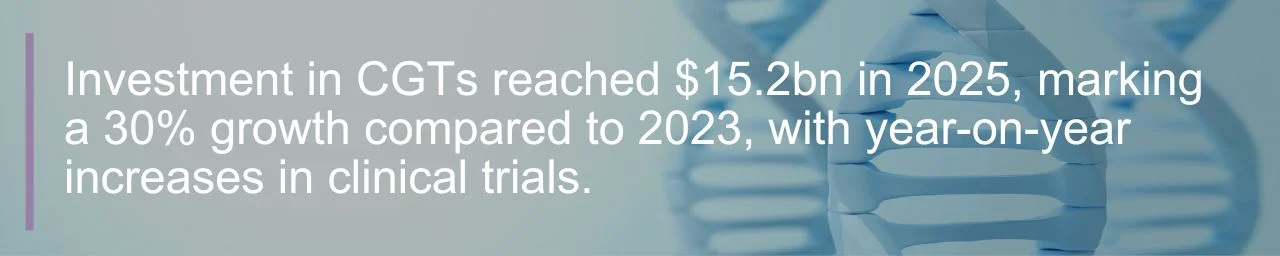
Investment in CGTs reached $15.2bn in 2025, marking a 30% growth compared to 2023, with year-on-year increases in clinical trials in the space reflecting significant potential despite challenges to the market.
This has a significant impact on the hiring market, too — as treatments become more personalised, investments in cutting-edge science increase, inflating the demand for top-tier talent to drive the potential in the space.
Digital transformation also goes hand-in-hand with personalised medicine’s prominence in 2026. Research indicates that the integration of AI and pharmacogenomics is significantly reshaping clinical decision-making and personalised medicine, with the potential to lead to more accurate diagnoses, targeted therapies, and improved patient outcomes.
In short, personalised medicine continues to advance steadily, with continued interest and investment in the area.
How To Position Yourself for Success in Life Sciences in 2026
The top trends for the life sciences sector in 2026 will influence a period of significant digital transformation, investment-driven therapeutics, and advancements that require the very best candidates to propel them forward.
Between the evolving trends of the industry, from AI R&D to the decrease in job openings but fierce competition for roles, life sciences companies will be on the cusp of unlocking a wealth of potential if they continue to develop and adapt in line with these shifts.
For life sciences candidates, the need for adaptability and a niche skillset, specifically one with a strong emphasis on digital fluency in AI and data analytics, is paramount. Due to the decrease in vacancies in life sciences, it’s important to combine your knowledge with practical skills to remain flexible to the needs of the market and the specific job role you’re applying for.
NES Fircroft has supported the life sciences industry for over 20 years, sourcing personnel across engineering, scientific and commercial roles across the market, worldwide. We specialise in recruitment for CapEx projects, as well as recruitment for biotechnology and pharmaceuticals. If you have a staffing need, our discipline-specific life sciences consultants will support you by providing the experts you need to continue innovating and growing — contact us today to discuss how we can support you.
If you’re a life sciences professional looking to grow your capabilities and thrive in the industry, browse our life sciences vacancies.
Global Life Sciences Trends 2026: Frequently Asked Questions
What are the top life sciences companies?
The top life sciences companies spanning pharma, biotech, and medical devices (highlighted for their revenue, R&D strength, and market value) are:
Why work with a specialist life science recruitment agency?
Working with a specialist life science recruitment agency is ideal for two key reasons: they know the current hiring landscape of life sciences — high demand, talent shortages, “war for talent”, skill niches — and the goals and needs of each business and the trends in their sector, helping them find the best candidate for the job role.
What does the hiring process look like for life sciences companies?
The hiring process for life sciences companies is highly competitive, thorough, and conducted in a multi-stage process. It usually begins with applicant tracking systems or life sciences recruiters screening candidates on their skills and experience, before several interviews, from initial all the way up to final-stage with senior leadership.
This process can be tricky due to the need for efficiency and clarity to avoid competitors taking top talent, which is why it’s best to partner with a life sciences recruitment specialist who can quickly assess the hiring criteria to find the best fit and expedite the process.
What jobs are available in life sciences?
There is a range of jobs across each life sciences area, from research & development, to manufacturing and data science & bioinformatics.
You can stay up to date with the latest life sciences job vacancies here, or register via our candidate portal.
How is technology (AI, automation, digital health) changing life sciences jobs?
Technology such as AI, automation, and digital health is changing life sciences jobs by increasing demand for roles such as data scientists, automation specialists, and tech-aligned researchers, whilst also driving a greater demand for tech-driven approaches within life sciences organisations.
In short, digital fluency and data-focused skillsets are in high demand.
What qualifications do I need to work in life sciences?
To work in life sciences, you usually need at least a Bachelor’s degree in a relevant field (e.g., biology, chemistry, biochemistry, etc). For more senior or advanced roles, a master’s degree or PhD is often necessary, alongside specific certifications (e.g., GCP, RAC) for the sector.
Relevant experience and skill sets are also key when looking for a job in life sciences, including lab and placement experience, and strong data and communication skills.
Related Posts
Top Data Centre Projects in APAC
03 Feb, 2026