How is Alaska Building Energy Independence and Creating Long-Term Jobs?
23 Sept, 202613:33Alaska is pursuing energy independence through a mix of oil & gas development, hydropowe...
Alaska is pursuing energy independence through a mix of oil & gas development, hydropower, wind energy, solar projects, minerals, and energy efficiency programs. Its natural resources and location make it one of the most valuable energy regions in North America. Energy independence in Alaska is about more than production. It’s also about reliable power, lower exposure to fuel supply disruptions, stronger local communities and long-term skilled employment. As investment enters new projects, building a workforce rooted in Alaska will be important.
Main insights:
- Alaska is a major U.S. energy producer and net energy exporter, contributing roughly 2-3% of the country’s primary energy production while holding substantial oil, gas, mineral, and renewable energy resources.
- More than 150 independent electrical grids have encouraged innovation in local power generation and microgrid technology.
- Projects such as Pikka and Alaska LNG are expected to create long-term employment opportunities.
- Local workforce development is central to ensuring the lasting benefits of energy investment are felt across Alaskan communities.
What does ‘Energy Independence' mean in Alaska?
In Alaska, energy independence is less about complete self-sufficiency and more about improving energy resilience, using locally available resources where feasible while reducing dependence on imported fuel and external supply chains. However, many communities operate independently of one another, leaving them vulnerable to power disruption and rising energy costs. Maintaining access to natural gas, upgrading infrastructure and increasing local generation capacity are important steps toward greater energy security.
As examples, the Railbelt grid serves around 79% of Alaska’s electricity demand, most of it coming from natural gas and the remainder from renewable sources. Rural Alaska has a number of independent grids which enable the communities to produce and manage their own energy near where it’s required (University of Alaska Fairbanks). And Sitka generates 99.9% of its electricity through hydroelectric power, helping avoid an estimated $50 million in annual fuel costs and reducing exposure to fuel transportation challenges. By having a more diverse range of energy sources, dependence on any one type of fuel is reduced, and communities are better protected against supply disruptions or external market pressures.

Alaska’s energy story began long before today’s projects
Long before Alaska statehood in 1959, Indigenous peoples including the Inupiat, Yup’ik, Athabascan, Tlingit, Haida and Aleut communities, built thriving societies across the region. Their knowledge of the environment, stewardship of natural resources and connection to the land continue to influence Alaska today.
The state's modern economy was transformed by the discovery of oil at Prudhoe Bay in 1968. The Trans-Alaska Pipeline System (TAPS), which was finished in 1977, linked the North Slope's oil resources of Alaska with global markets. The approximately 800-mile pipeline from Prudhoe Bay to Valdez became one of the greatest engineering achievements in North America, carrying up to 2 mb/d and helping reduce America's dependence on imported energy during a particularly volatile time.
Few infrastructure projects have had such a profound impact on a state's economy or on national energy security.
Alaska’s energy wealth is extraordinary
Alaska produces far more energy than it consumes and continues to rank among the most energy-rich states in the country, supplying 2-3% of the nation’s energy production. According to the U.S. Energy Information Administration, natural gas accounts for nearly 60% of the state's end-use energy consumption, while petroleum contributes more than one-third.
The North Slope has long attracted investment and still does, containing some of the largest undeveloped hydrocarbon resources in the U.S. Projects such as Pikka are expected to contribute to new oil production over the coming years, helping reverse decades of decline.
Attention also remains on natural gas. Trillions of cubic feet of gas on the North Slope remained effectively stranded because there was no economical way to bring it to market, but today that is changing. The Alaska LNG project proposes transporting North Slope gas through an 800-mile pipeline to Southcentral Alaska before liquefication and export. The system could transport around 3.5 Bcf/d and produce up to 20 Mt of LNG annually. If developed successfully, the project would rank among the largest energy infrastructure investments in North America.

Why is Alaska important to America’s energy independence?
The idea of energy independence is frequently mistaken for just producing more oil and gas; in fact, it involves making sure that people have reliable, affordable, and secure access to energy regardless of global disruptions.
Alaska contributes to that goal in several ways:
Strategic domestic supply
Alaska's resources are entirely under U.S. jurisdiction, and every additional barrel of domestic production reduces exposure to geopolitical instability and foreign supply disruptions.
Proximity to Asian markets
Anchorage is nearer to Tokyo than it is to New York; LNG shipments from Alaska can get to major Asian markets quicker than those that start at many Gulf Coast facilities, and, since demand for natural gas is continuing in Asia, Alaska could become a major supplier and thus strengthen America's position in global energy markets.
Critical minerals
All sorts of technologies, such as electric vehicles, batteries, wind turbines, advanced electronics, and defense technologies, depend on critical minerals. Since Alaska has significant resource potential, including gold, copper, cobalt, lithium, and rare earth elements (REEs), the state is important not only to conventional energy systems but also to the technologies driving the energy transition.
Energy diversification
There’s great potential for the use of hydropower, together with wind corridors, geothermal possibilities, clean coal energy, and new capabilities in carbon management. The Department of Energy has highlighted Alaska's ability to combine natural gas development with lower-carbon technologies and carbon storage initiatives to achieve greater energy independence. Proposed developments such as Terra Energy’s coal-powered generation project have been promoted as a potential source of large-scale, reliable electricity, which could serve all power needs along the Railbelt, military bases, and enough excess energy for data centers and future manufacturing growth.

What are the top renewable energy solutions for achieving energy independence in Alaska?
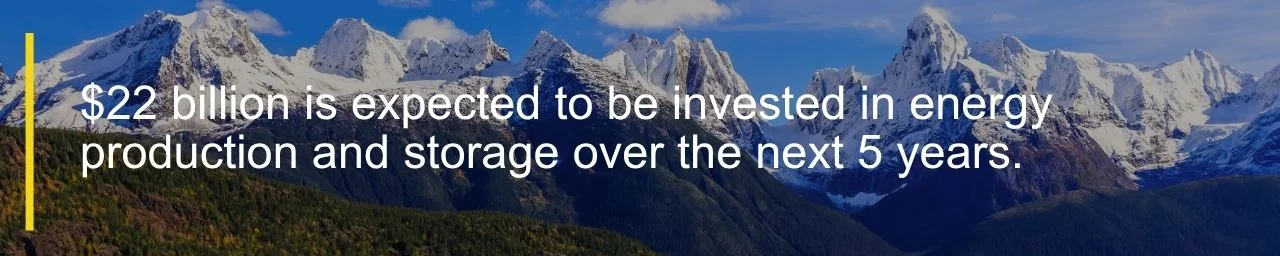
Renewable energy projects are helping communities reduce dependence on imported fuel and improve local energy security, with about $22 billion expected to be invested in energy production and storage over the next 5 years.
Hydropower
Hydropower is one of Alaska’s strongest success stories, supplying around a quarter of the state’s electricity. Sitka’s hydroelectric system supplies nearly all local electricity needs, and in Kodiak, nearly 100% of power is renewably generated, 80% percent from hydropower and the remaining by wind. These systems have helped communities achieve more stable and predictable electricity costs than locations reliant on imported fuel.
Wind energy
Wind projects are helping to improve energy security in certain rural areas of Alaska, where diesel generation has in the past been the main source. Over 30 Alaskan communities have taken local approaches, using either standalone turbines or wind-diesel hybrid systems. The introduction of wind power has led to a decrease in fuel consumption and less exposure to fluctuating prices. Equipment used in these locations is specifically designed to withstand extreme weather conditions.
Solar and battery storage
Although Alaska typically has long winters and limited daylight, some parts of the state receive extended periods of sunshine during the summer. Together with the decreasing cost of technology, solar energy has become an attractive possibility for some communities. Solar arrays have been installed in places like Kotlik and Tok and these are coupled with battery storage systems that are able to function in extremely low temperatures.
Microgrids
Alaska's geography has encouraged the development of one of the world's largest networks of isolated community power systems. More than 150 standalone grids serve towns and villages across the state, many of which are inaccessible by road. This has encouraged local approaches to power generation that combine diesel, wind, solar, hydroelectric and battery storage technologies according to community needs.
Kotzebue is a successful example of microgrid use. Located above the Arctic Circle and accessible primarily by air for much of the year, the community once depended almost entirely on fuel delivered during a short summer shipping season. The addition of wind turbines, solar generation and battery storage has allowed the local utility to displace hundreds of 350,000-400,000 gallons of diesel annually, reducing exposure to transportation disruptions and fuel price fluctuations.
Alaska’s energy future depends on local communities
The conversation around energy independence typically focuses on projects, infrastructure, and investment figures, but the people living in Alaska are its greatest asset.
Alaskans are often described as fiercely independent, practical, and adaptable, and many live in remote areas where self-sufficiency is a necessity due to the state's geography and climate.
More than 200 rural and mainly Indigenous communities aren’t connected to a road system and rely on imported diesel, with many rural villages facing some of the highest energy costs in America. This reality has encouraged local innovation over the years and produced a culture that embraces both tradition and ingenuity. Expanding clean energy infrastructure has the potential to create new employment opportunities in the country rather than outsourcing them, strengthening local supply chains. . However, as many Alaskan communities aren’t connected to a shared grid, the benefits of new projects can’t always been distributed widely. Investments in transmission and grid infrastructure could help improve reliability and help more communities access affordable, secure energy.
Community energy projects across Alaska open prospects for local participation in energy planning and operations. Commercial fishing, energy development, tourism, aviation, military service, and Native subsistence lifestyles often coexist. It’s not uncommon to meet someone who works in the petroleum industry year-round, then spends time fishing hunting, or flying small aircraft during their rotational time off.
Indigenous communities are central to Alaska’s energy sector. Long-term project success depends on meaningful engagement with the people who live and work in these regions.
What are the key job roles in Alaska’s energy sectors?
Although renewable energy employment remains relatively small compared to other parts of Alaska's energy sector, the industry is expected to grow. Energy efficiency currently supports a larger workforce, with many professionals working in areas such as building performance, HVAC systems, construction technologies, energy auditing, and efficiency-focused engineering services.
Roles commonly required include:
- Project & Construction Management (Project Managers, Directors, Construction Managers and Supervisors)
- Engineering & Technical Specialists (Mechanical, Civil, Structural, Electrical, Process and Project Engineers)
- Operations, Maintenance & Field Services (Operators, Technicians, Reliability and Maintenance Professionals)
- Health, Safety, Environmental & Quality (HSE, Environmental Specialists, Process Safety, QA/QC)
- Supply Chain, Procurements & Contracts
- Land, Regulatory, & Government Affairs
- Back Office (HR, Finance, Accounting, Marketing, and Communications)
Many of these positions support projects throughout their operational life, creating opportunities for people seeking long-term careers within Alaska.

Building Alaska’s next generation of energy talent
A durable workforce can’t be built through just infrastructure investment; training, education, and career pathways are equally important.
The Alaska Network for Energy Education and Employment (ANEEE) was established to improve education, workforce training and careers throughout the state. The program works with schools, utilities, villages, Alaska Native organizations, industry partners and public agencies to connect Alaskans with the best employment opportunities available in the energy sector.
This emphasis on local talent is important. Energy projects create the greatest long-term value when skills, experience, and employment opportunities stay within Alaska’s communities. This strengthens workforce continuity and reduces skills shortages in sectors that are important to Alaska’s ambitions.
Partner with NES Fircroft
Established in Alaska since 2009, NES Fircroft has decades of experience in supporting energy, power, infrastructure, and engineering projects globally, and is one of Alaska's top engineering recruitment agencies. Our focus is on helping organizations secure the talent needed to deliver projects safely while strengthening local workforce capability. We work closely with employers to identify professionals who can contribute to communities, support knowledge transfer and build lasting careers within the state.
Explore our current jobs in Alaska or get in touch with us today for specialist recruitment support.